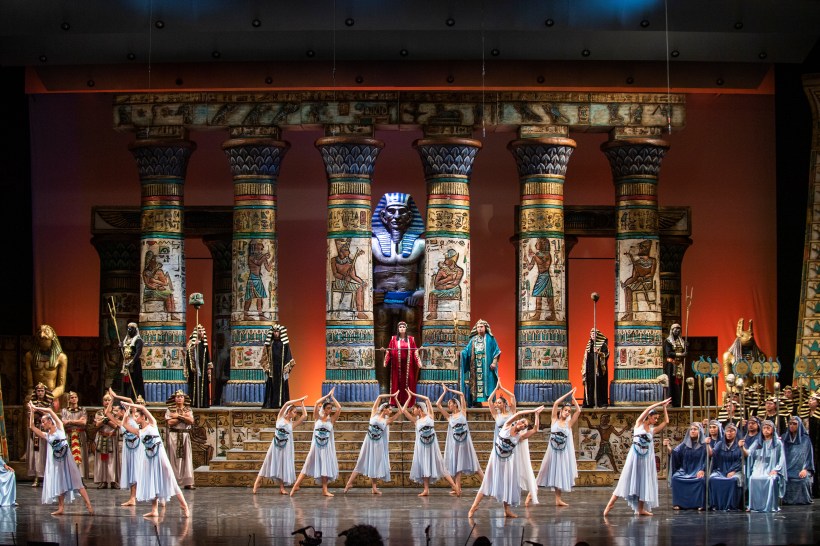
“Aida” of Giuseppe Verdi at Ankara Congresium, 19th October 2019 Photo credits: Emre Turan for Genel DOB
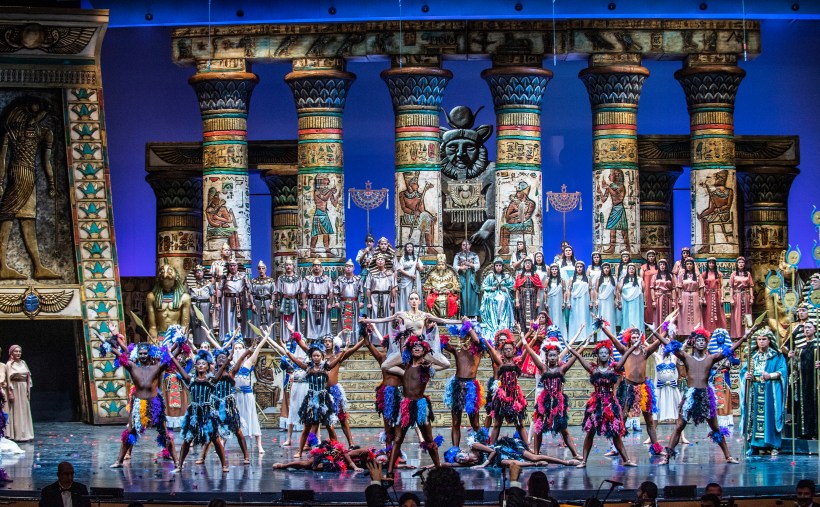
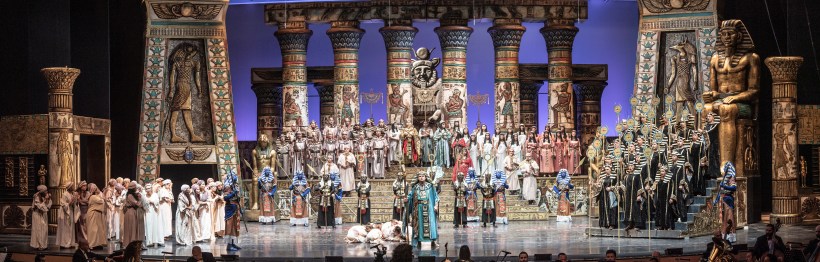
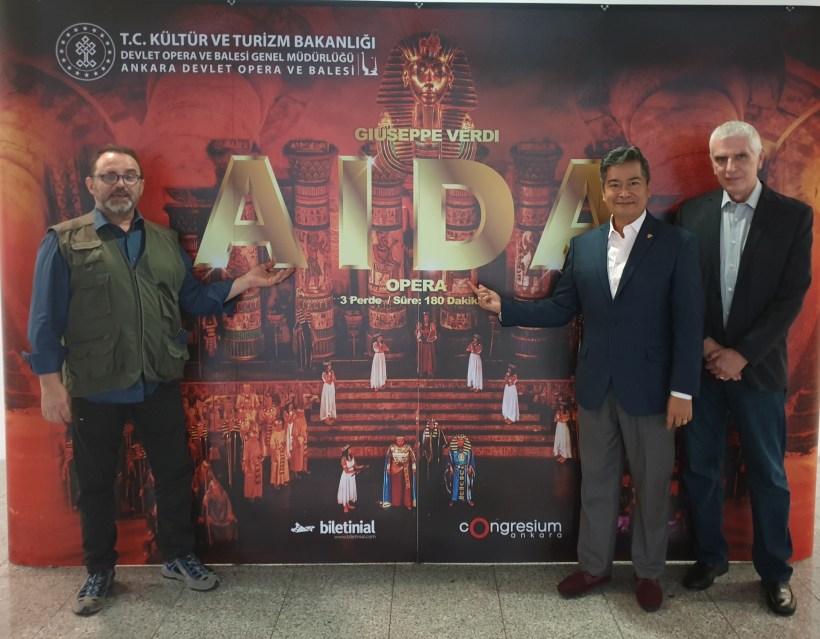
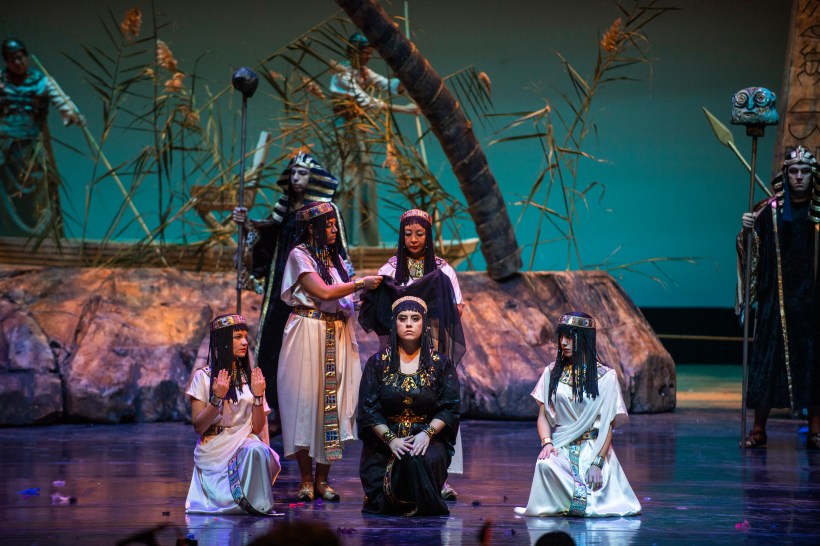
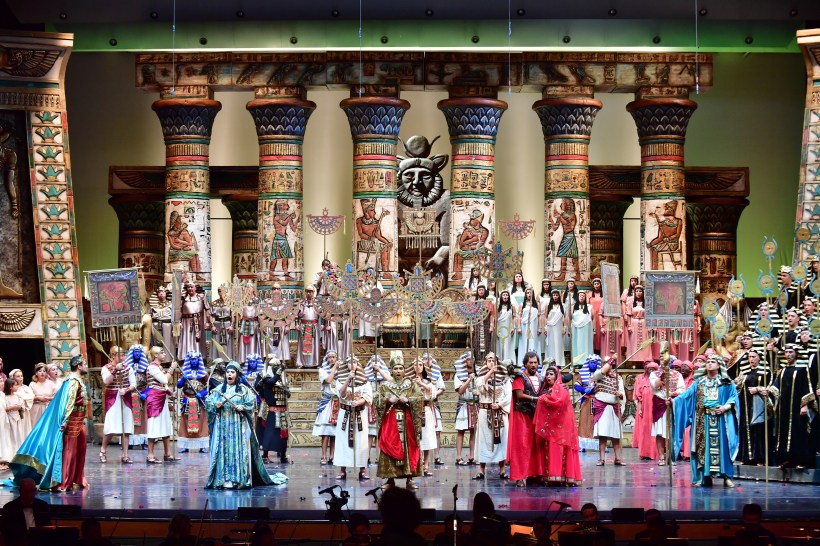
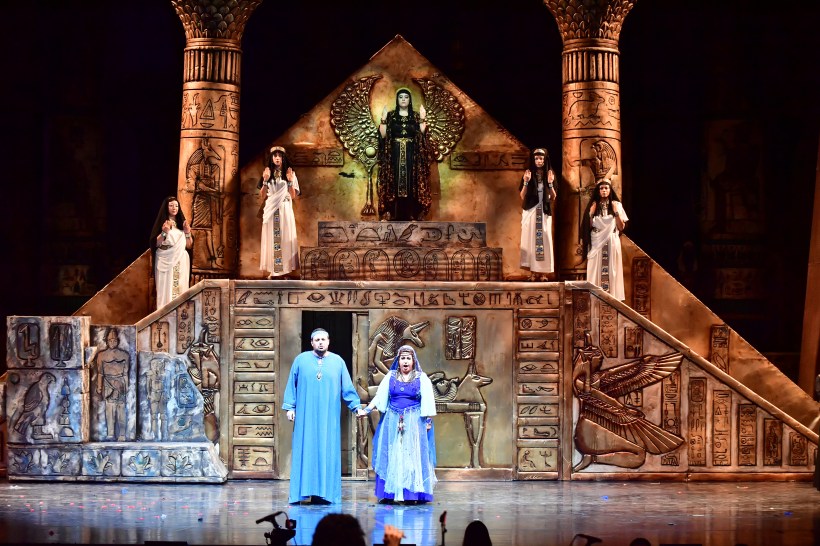
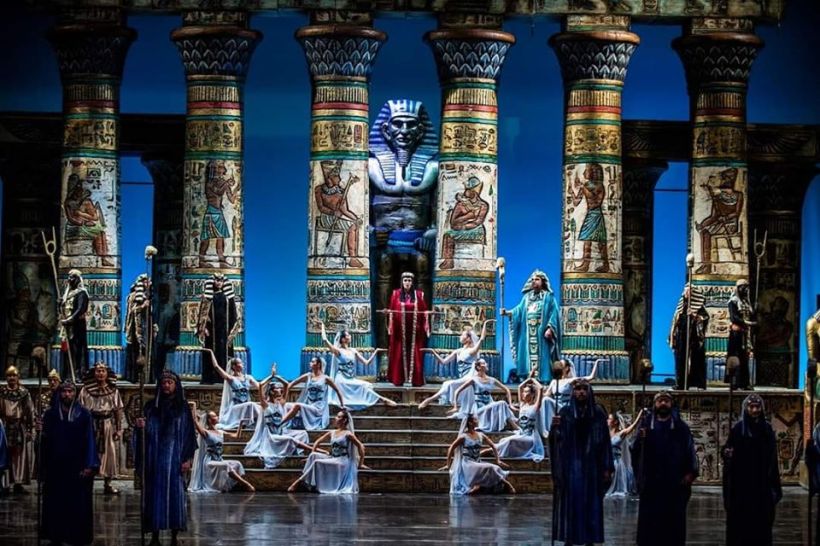
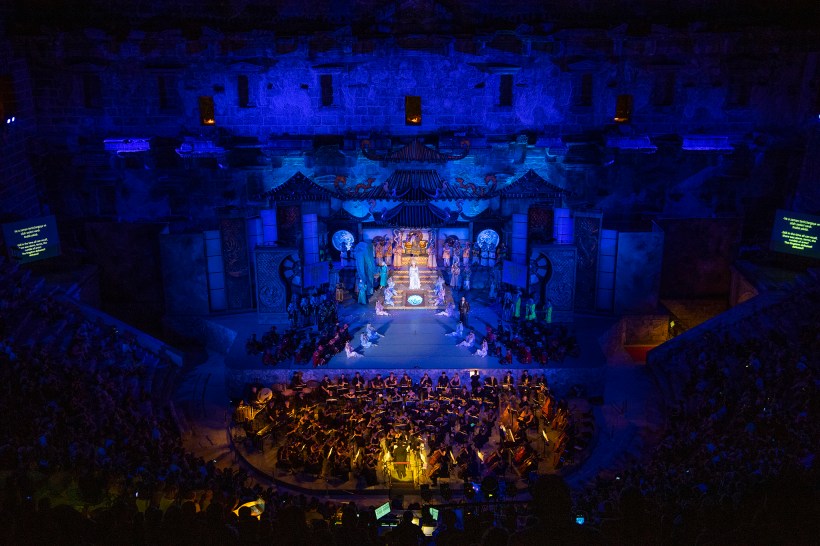
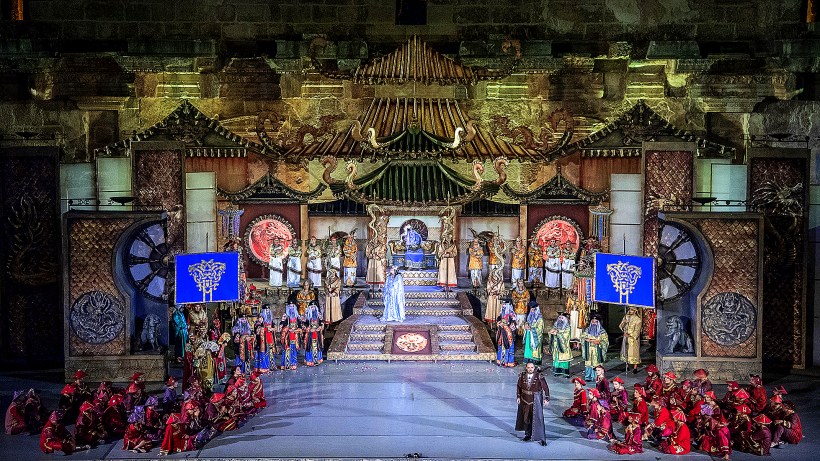
The opera “Aida,” one of the major productions of the State Opera and Ballet, was presented to art lovers in all of its magnificence at the Congresium Stage for the first time in the capital Ankara on Oct. 19, 2019.
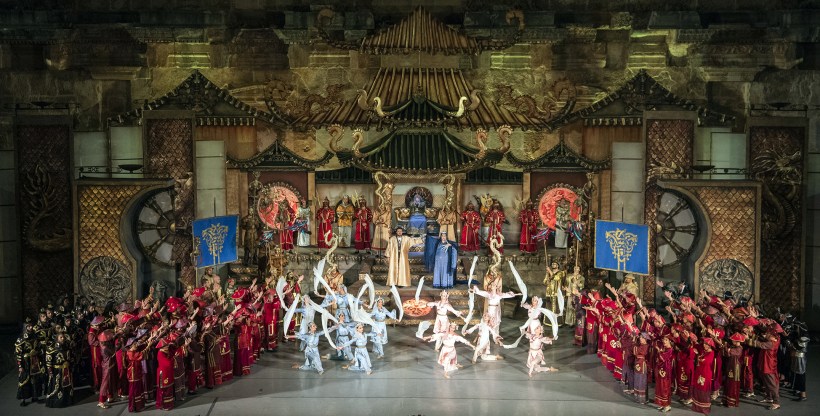
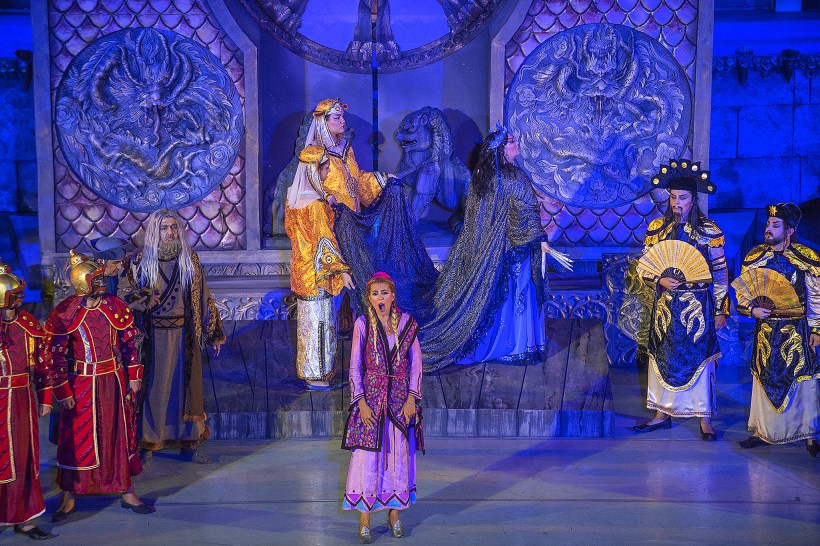
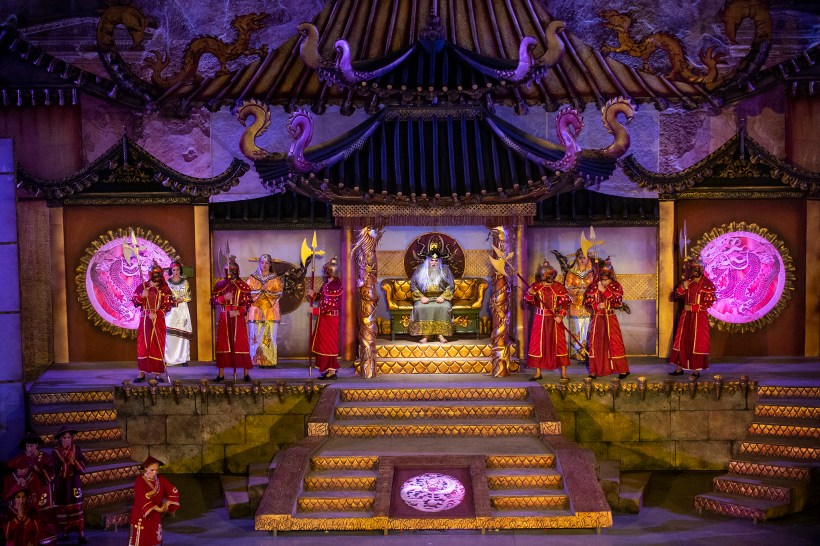
The opera “Aida,” which is about the impossible love of the brave commander Radames and the captive Abyssinian Princess Aida, was staged at the Ancient Theatre of Aspendos last month. “Aida,” which has gone down in history as the “most beautiful opera” by Giuseppe Verdi, the famous Italian composer from the 19th Century School of Italian Opera, captivated audiences with its magnificent decor and costumes at the Congresium Stage in Ankara for the first time.
Directed by famous Italian director Vincenzo Grisostomi Travaglini, “Aida” received great acclaim from the audience at the Ancient Theatre of Aspendos. That time, it was performed by the cast of the Ankara State Opera and Ballet with magnificent decor and costumes.
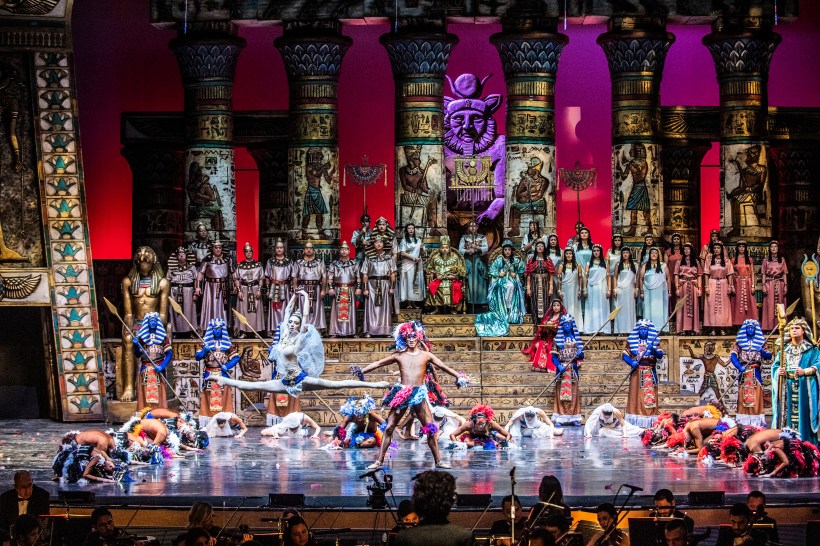
“Aida” of Giuseppe Verdi at Ankara Congresium, 19th October 2019 Photo credits: Emre Turan for Genel DOB
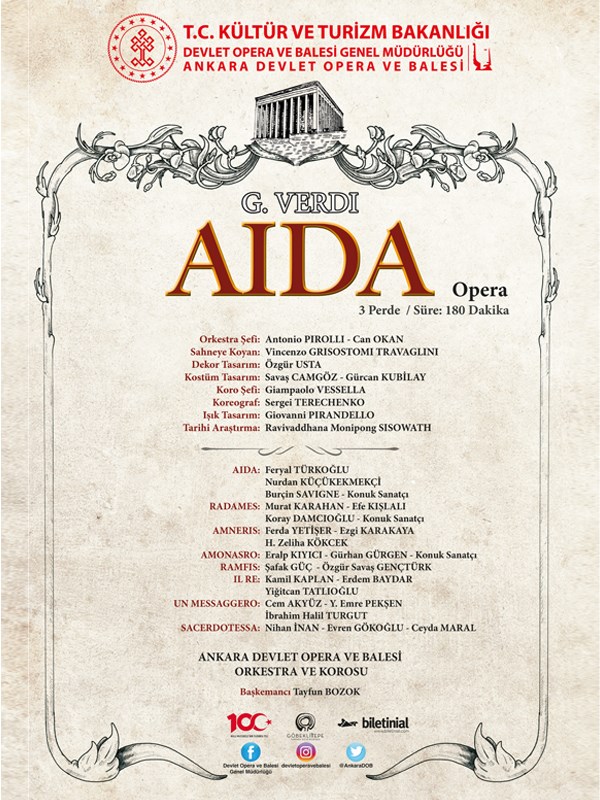
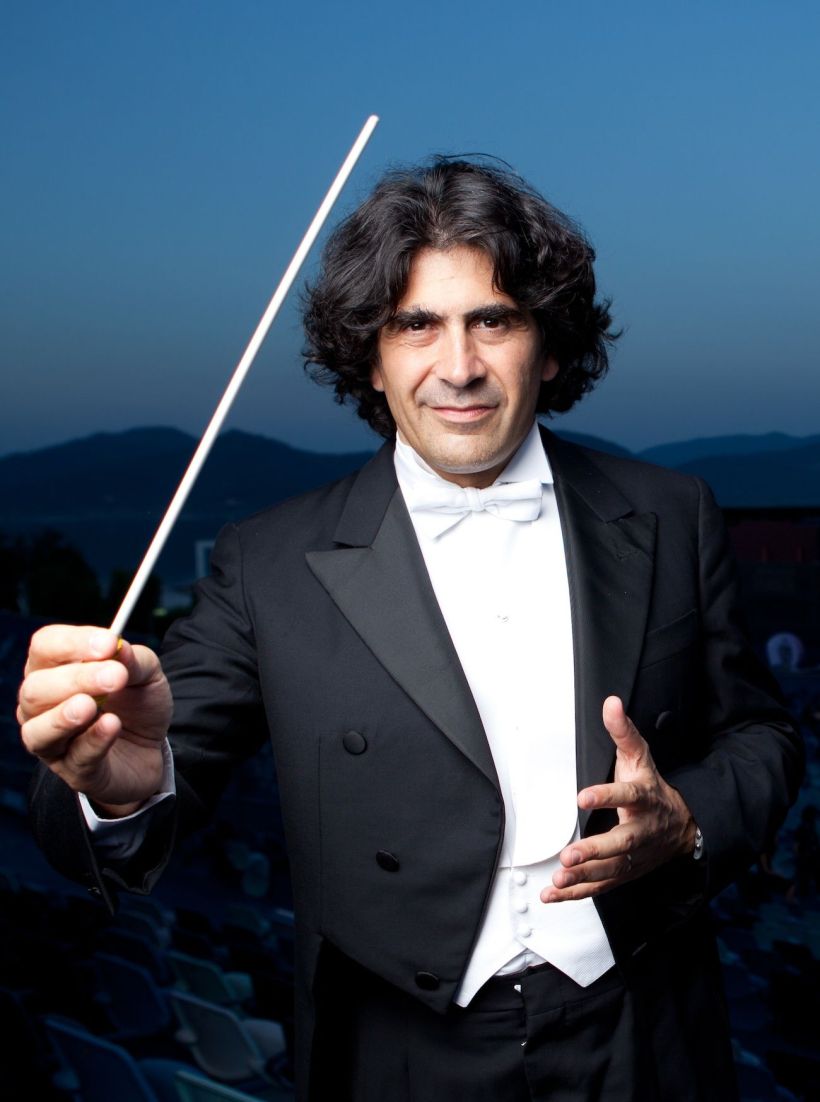
In turn, Feryal Türkoğlu, Nurdan Küçükekmekçi and Burçin Savıgne took on the role of “Aida,” Murat Karahan, Efe Kışlalı and Koray Damcıoğlu will play “Radames,” Ferda Yetişer, Ezgi Karakaya and Zeliha Kökçek will play “Amneris,” and Eralp Kıyıcı and Gürgan Gürgen took on the role of “Amonasro.” Again, alternately, the artists of the Ankara State Opera and Ballet Orchestra, under the direction of conductor Antonio Pirolli and conductor Can Okan, accompanied the performers.
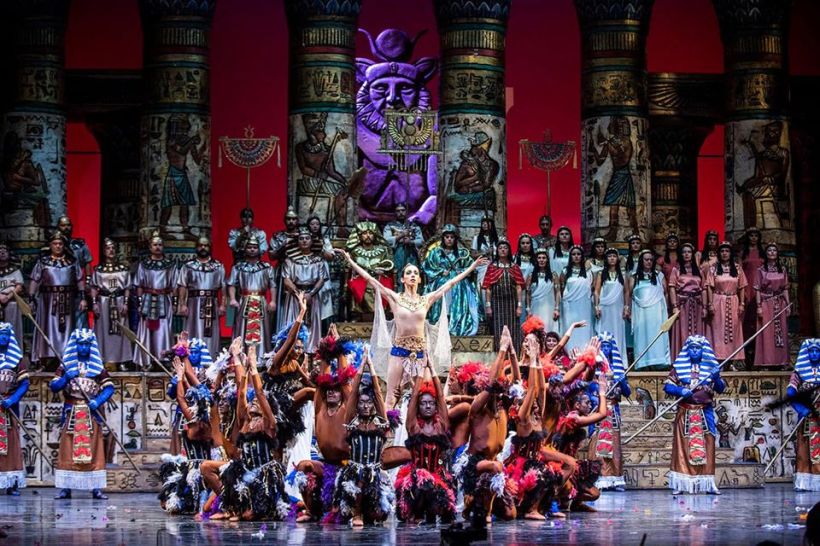
“Aida” of Giuseppe Verdi at Ankara Congresium, 19th October 2019 Photo credits: Emre Turan for Genel DOB
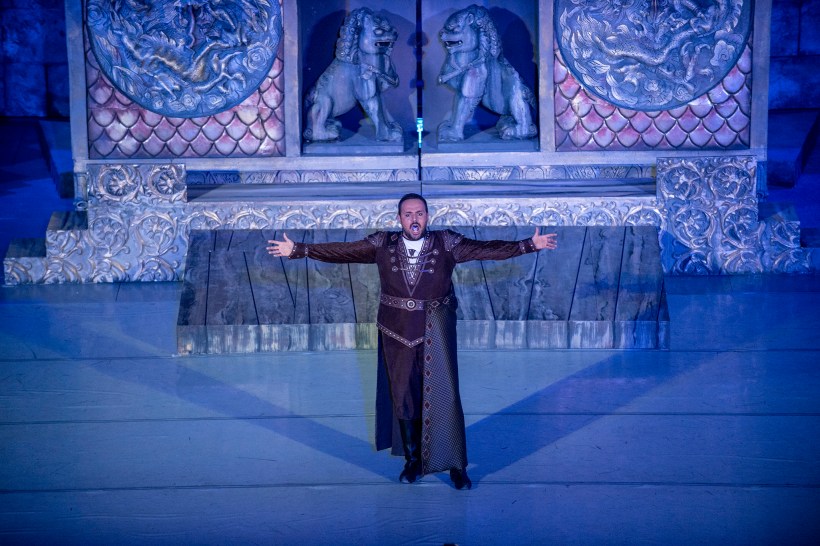
At the Congresium on the evening of Oct. 19, art lovers had the opportunity to watch the “Radames” performance of “Aida” staged by State Opera and Ballet’s general manager and general art director, tenor Murat Karahan, at Italy’s historical Arena Di Verona and Antalya’s Ancient Theatre of Aspendos last summer. Feryal Türkoğlu sang “Aida” in the show.
“Aida” of Giuseppe Verdi at Ankara Congresium, 19th October 2019 Photo credits: Emre Turan for Genel DOB
The decor for the work was designed by Özgür Usta, the costumes by Savaş Camgöz and Gürcan Kubilay, and the lighting by Giovanni Pirandello; the choir was led by Giampaolo Vessella. Sergei Terechenko choreographed the production, which also featured ballet and children’s ballet performers from Ankara State Opera and Ballet.
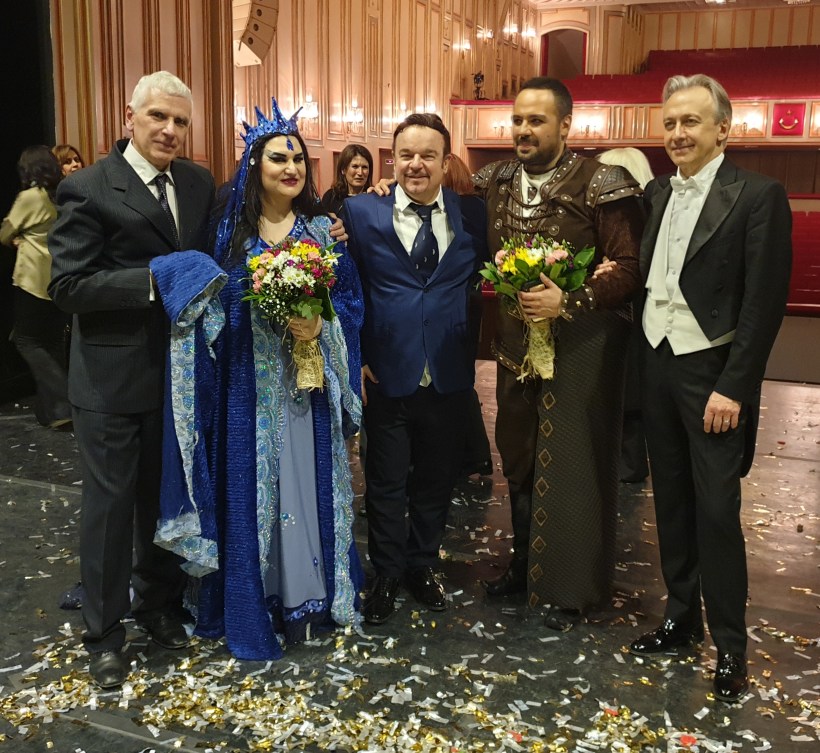
“Aida” of Giuseppe Verdi at Ankara Congresium, 19th October 2019 Photo credits: Emre Turan for Genel DOB“Aida” of Giuseppe Verdi at Ankara Congresium, 19th October 2019 Photo credits: Emre Turan for Genel DOB
Last but not least, grateful thanks to General Director Murat Karahan who wished fom the bottom of his heart the return of the grand operas in Turkey and gave the right means to achieve this important decision.
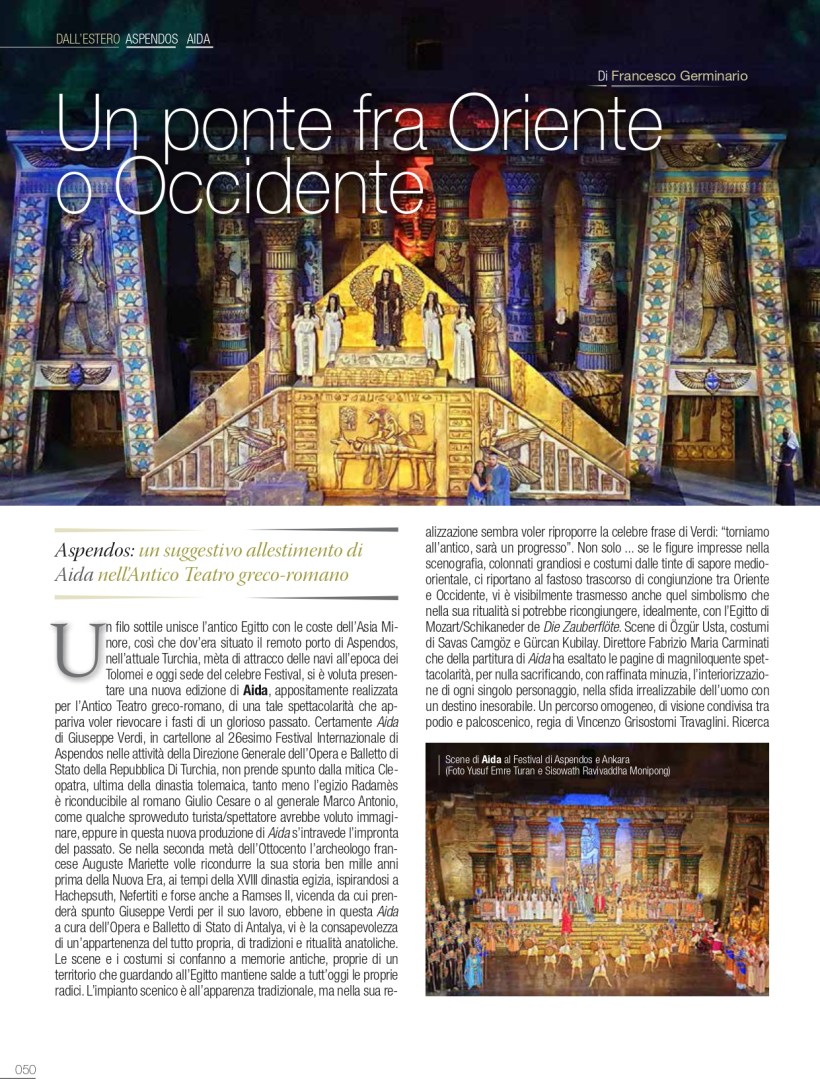
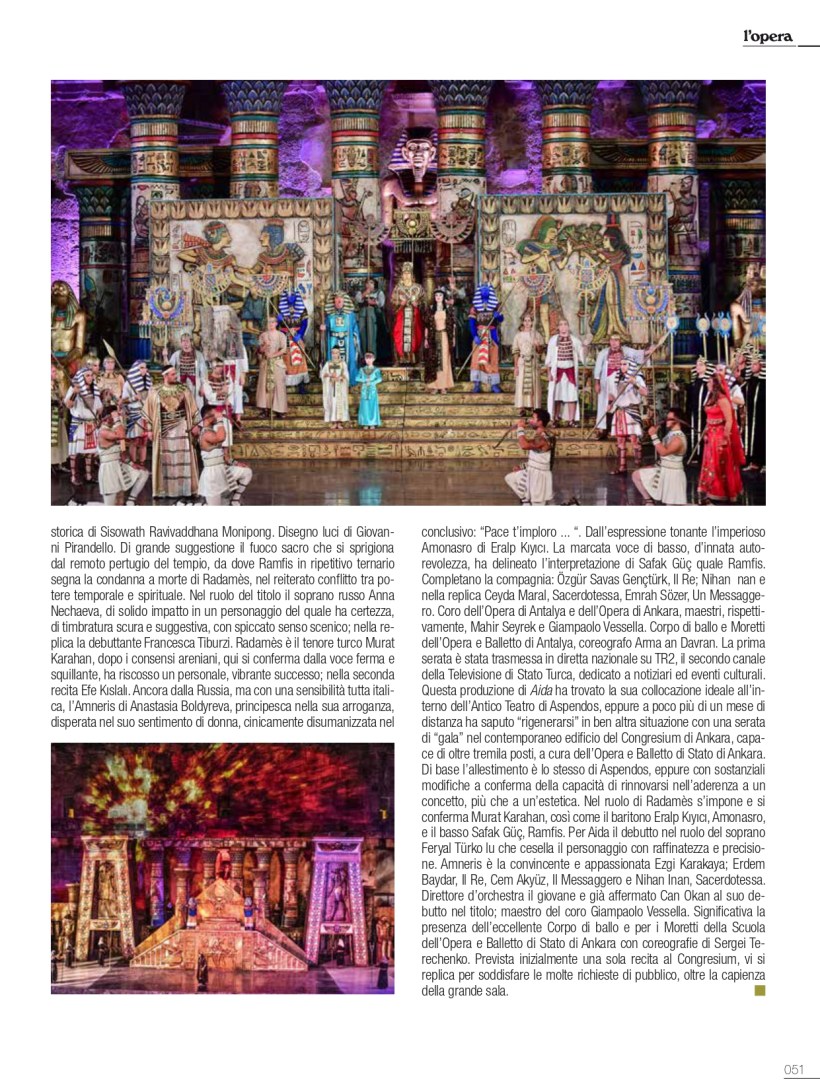
Un filo sottile unisce l’antico Egitto con le coste dell’Asia Minore, così che il remoto porto di Aspendos, nell’attuale Turchia, era meta di attracco delle navi all’epoca dei Tolomei. Certamente Aida di Giuseppe Verdi, in cartellone al 26esimo Festival Internazionale di Aspendos, non prende spunto dalla mitica Cleopatra, ultima della dinastia tolemaica, tanto meno l’egizio Radamès è riconducibile al romano Giulio Cesare o al generale Marco Antonio, come qualche sprovveduto turista/spettatore avrebbe voluto immaginare, eppure nella nuova produzione di Aida appositamente realizzata per l’Antico Teatro greco-romano di Aspendos, s’intravede l’impronta del passato. Se nella seconda metà dell’Ottocento l’archeologo francese Auguste Mariette volle ricondurre la sua storia ben mille anni prima della Nuova Era, ai tempi della XVIII dinastia egizia, ispirandosi a Hachepsuth, Nefertiti e forse anche a Ramses II, vicenda da cui prenderà spunto Giuseppe Verdi per il suo lavoro, ebbene in questa Aida ad Aspendos a cura dell’Opera e Balletto di Stato di Antalya, vi è la consapevolezza di un’appartenenza del tutto propria, di tradizioni e ritualità anatoliche. Le scene e i costumi si confanno a memorie antiche, proprie di un territorio che guardando all’Egitto mantiene salde a tutt’oggi le proprie radici. L’impianto scenico è all’apparenza tradizionale, ma nella sua realizzazione sembra voler riproporre la celebre frase di Verdi: “torniamo all’antico, sarà un progresso”. Non solo … se le figure impresse nella scenografia, colonnati grandiosi e costumi dalle tinte di sapore medio-orientale, ci riportano al fastoso passato di congiunzione tra Oriente e Occidente, vi è visibilmente trasmesso anche quel simbolismo che nella sua ritualità si ricongiunge, idealmente, con l’Egitto di Mozart/Schikaneder ne Die Zauberflöte. Scene di Özgür Usta, costumi di Savaş Camgöz e Gürcan Kubilay.
Direttore Fabrizio Maria Carminati che della partitura di Aida ha esaltato le pagine di magniloquente spettacolarità, per nulla sacrificando, con raffinata minuzia, l’interiorizzazione di ogni ogni singolo personaggio, nella sfida irrealizzabile dell’uomo con un destino inesorabile. Un percorso omogeneo, di una visione condivisa tra podio e palcoscenico, regia di Vincenzo Grisostomi Travaglini. Ricerca storica di Sisowath Ravivaddhana Monipong. Disegno luci di Giovanni Pirandello. Di grande suggestione il fuoco sacro che si sprigiona dal remoto pertugio del tempio, da dove Ramfis in ripetitivo ternario segna la condanna a morte di Radamès, nel reiterato conflitto tra potere temporale e spirituale.
Nel ruolo del titolo il soprano russo Anna Nechaeva di solido impatto in un ruolo del quale ha certezza, di timbratura scura e suggestiva, con spiccato senso scenico; nella replica la debuttante Francesca Tiburzi. Radamès è il tenore turco Murat Karahan, dopo i consensi areniani, qui si conferma dalla voce ferma e squillante, ha riscosso un personale, vibrante successo; nella seconda recita Efe Kışlalı. Ancora dalla Russia, ma con una sensibilità tutta italica, l’Amneris di Anastasia Boldyreva, principesca nella sua arroganza, disperata nel suo sentimento di donna, cinicamente disumanizzata nel conclusivo: “Pace t’imploro … “.
Dall’espressione tonante e autorevole presenza l’imperioso Amonasro di Eralp Kıyıcı. La marcata voce di basso, d’innnata autorevolezza ha delineato l’interpretazione di Safak Guç, quale Ramfis. Completano la compagnia: Ozgur Savas Gencturk, il Re, Nihan Inan e nella replica Ceyda Maral, Sacerdotessa, Emrah Sòzer Un Messagero. Coro dell’Opera di Antalya e dell’Opera di Ankara, maestri, rispettivamente, Mahir Seyrek e Giampaolo Vassella. Corpo di ballo e ballo bambini (Moretti) dell’Opera e Balletto di Antalya, coreografo Armağan Davran.
La prima serata è stata trasmessa in diretta nazionale su TR2, il secondo canale della Televisione di Stato Turca, dedicato a notiziari ed eventi culturali.
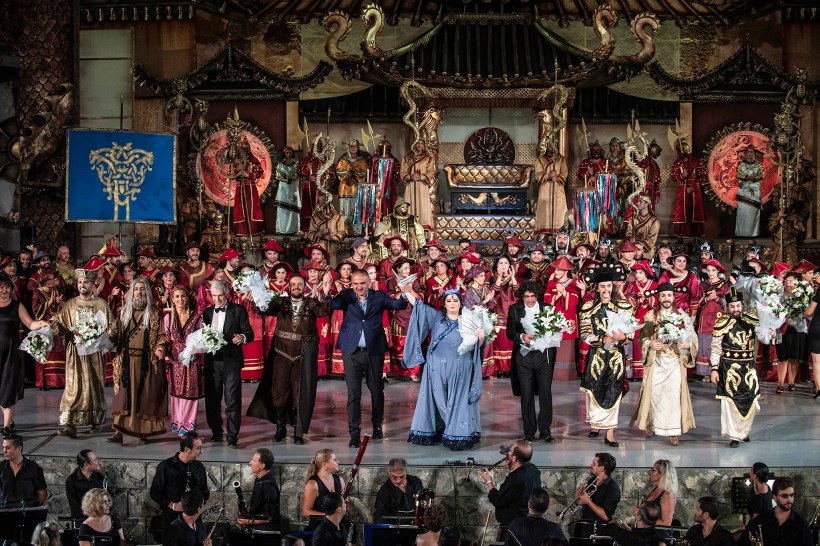
La produzione di Aida ha trovato la sua collicazione ideale all’interno dell’Antico Teatro di Aspendos, eppure a quasi un mese di distanza ha saputo “rigenerarsi” in ben altra situazione in una serata di “gala” nel contemporaneo edificio del Congresuim di Ankara, capace di oltre tremila posti, a cura dell’Opera e Balletto di Stato di Ankara. Di base l’allestimento è lo stesso di Aspendos,eppure con sostanziali modifiche a conferma che non esistono recite, una eguale all’altra, ma bensì la capacità di rinnovarsi nell’aderenza a un concetto, più che a una pura estetica. Nel ruolo di Radamès s’impone e si conferma Murat Karahan, cosi come Eralp Kiyici, Amonasro, e il basso Safak Guç, Ramfis. Per Aida il debutto nel ruolo del soprano Feryal Türkoğlu che cesella il personaggio con raffinatezza e precisione. Amneris è la convincente e appassionata Ezgi Karakaya; Erdem Baydar, il Re, Cem Akyuz, il Messaggero e Nihan Inan, Sacerdotessa. Direttore d’orchestra il giovane e già affermato Can Okan al suo debutto nel titolo; maestro del coro Giampaolo Vessella. Significativa la presenza dell’eccellente Corpo di ballo e per i Moretti della Scuola dell’Opera e Balletto di Stato di Ankara con coreografie di Sergei Terechenko. Prevista inizialmente una sola recita al Congresium, vi si replica per soddisfare le molte richieste di pubblico, oltre la capienza della grande sala.
Photo credits: Yusuf Emre Turan & Sisowath Ravivaddhana Monipong
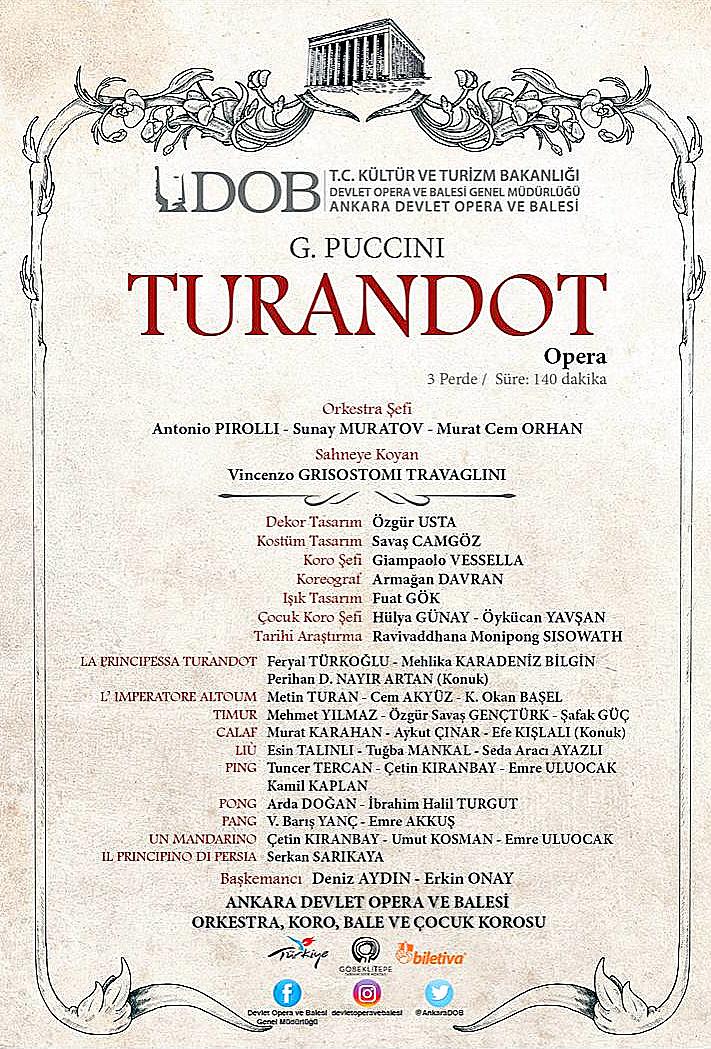
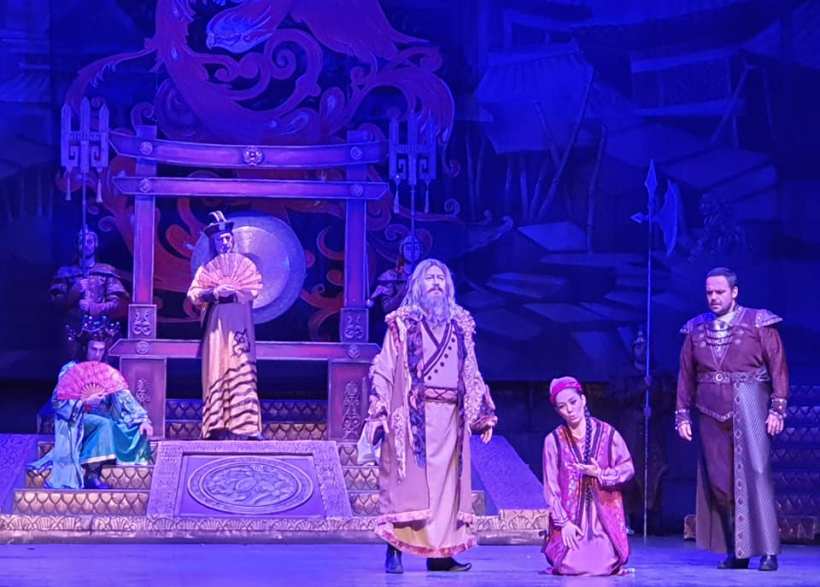
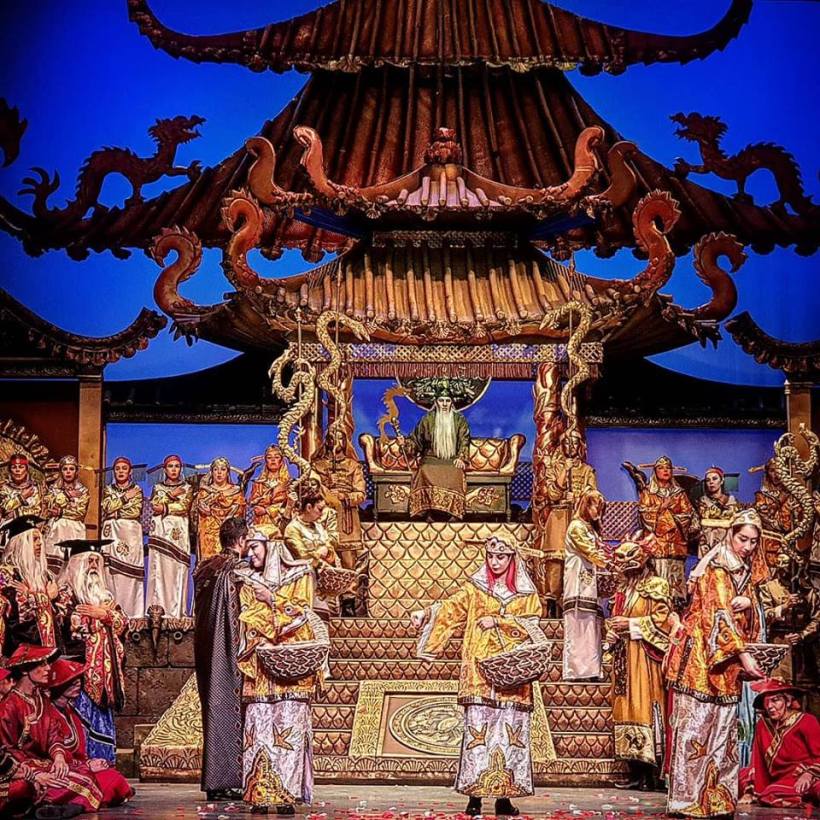
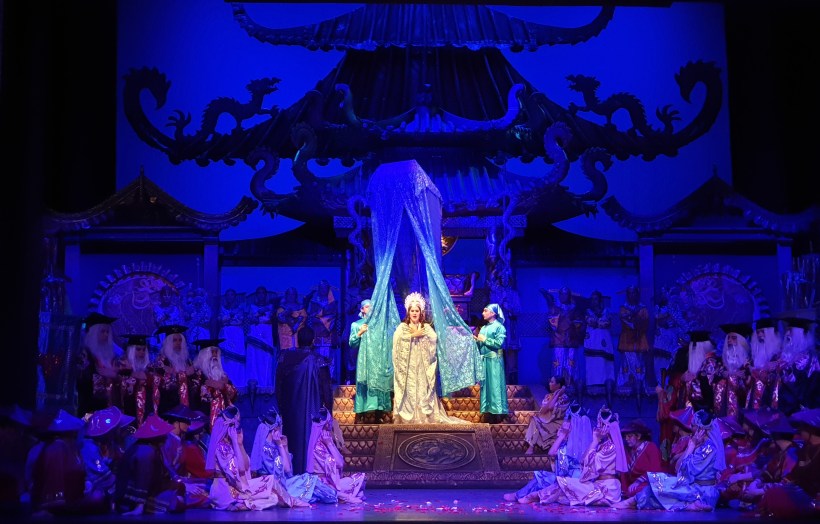
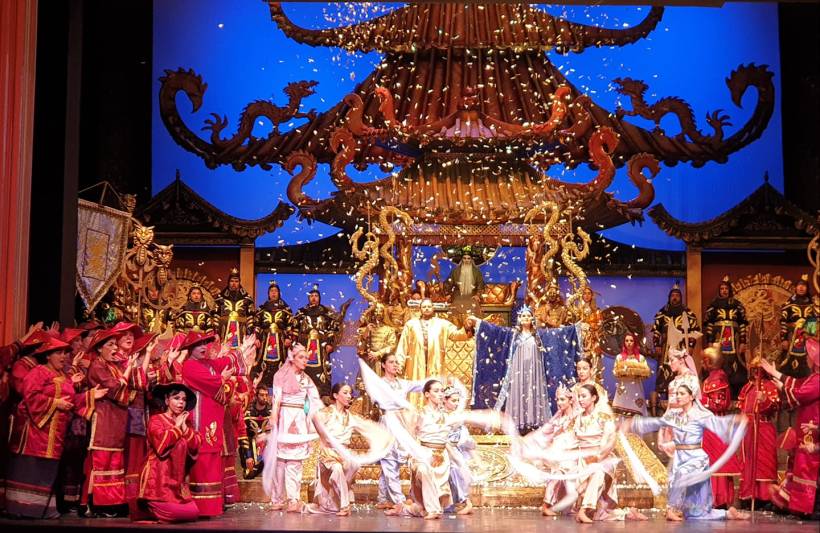
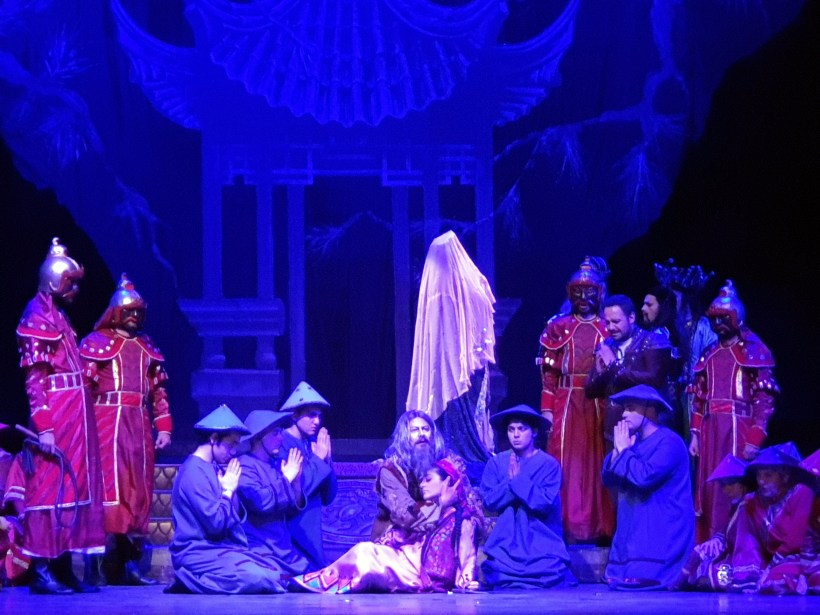
On 16th March 2019, Ankara State Opera and Ballet presented “Turandot”, the absolute masterpiece of Giacomo Puccini in a new production, with Maestro Vincenzo Grisostomi Travaglini as Stage Director and Maestro Antonio Pirolli as Conductor.
The two Maestros, long-term friends, remembered with emotion their first “Turandot” together some 19 years ago in the same Opera Theatre, with Soprano Nilgun Akkerman.
Under the impulsion of the new Director General of Turkish State Opera and Ballet, brilliant Tenor Murat Karahan who called back both Conductor and Stage Director to set up again a fairy tale style production, the actual resurrection of opera the way we like it, a fantastic evening opened up to the notes of Puccini’s last work…
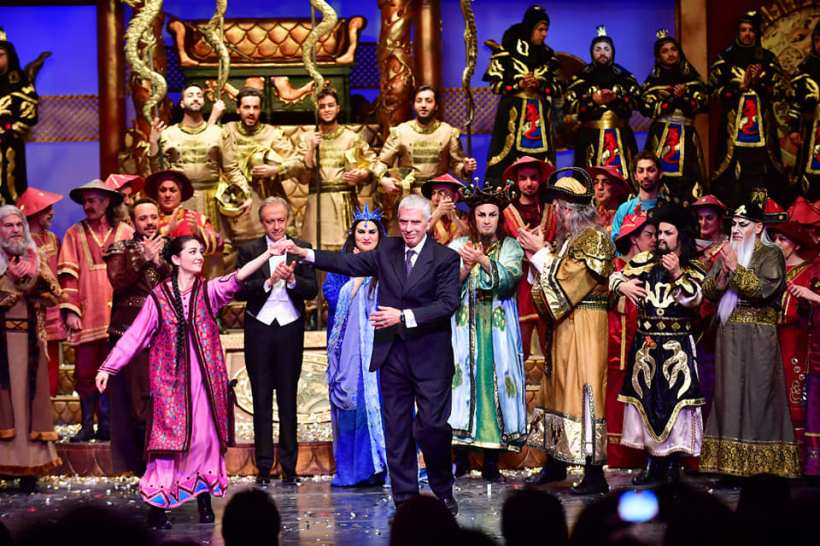
The somptuous costumes of Savaş Camgöz, the magnificent sets of Özgür Usta and the magic lights of Fuat Gök have definitely given the performance the utmost touch of glamour. The public was enthusiastic and the applause at the end lasted more than fifteen minutes.
Mehlika Karadeniz Bilgin, who incarnated a very special Turandot, with her cristalline voice, declared about the production : “The work exposes how Turandot, the princess who doesn’t believe in love and hates men, gets to know love. It is the inner travel of a woman finding herself and a fight between her brain and heart. In fact, Turandot is the fight between the bad and the good,”
Explaining that the mystic and the mysterious side of the Far East are reflected on the opera, Maestro Vincenzo Grisostomi Travaglini said, “It portrays the inner conflicts of Princess Turandot and her fight with love.” Moreover, his classical and royal style given to the elegant stage direction confered to the opera the real sense of what opera should be on such an important stage as the Ankara State Opera and Ballet.
On another hand, the sincere friendship between Maestro Pirolli and Maestro Grisostomi Travaglini could be felt as their arts coincided in putting together the virtuosity of music tightly-knit with the respect of Puccini’s will to render solemnity and human research for truth and love. The climax was during the famous moment of Liù’s death, when the emotions reach the vibrations of everyone’s heart.
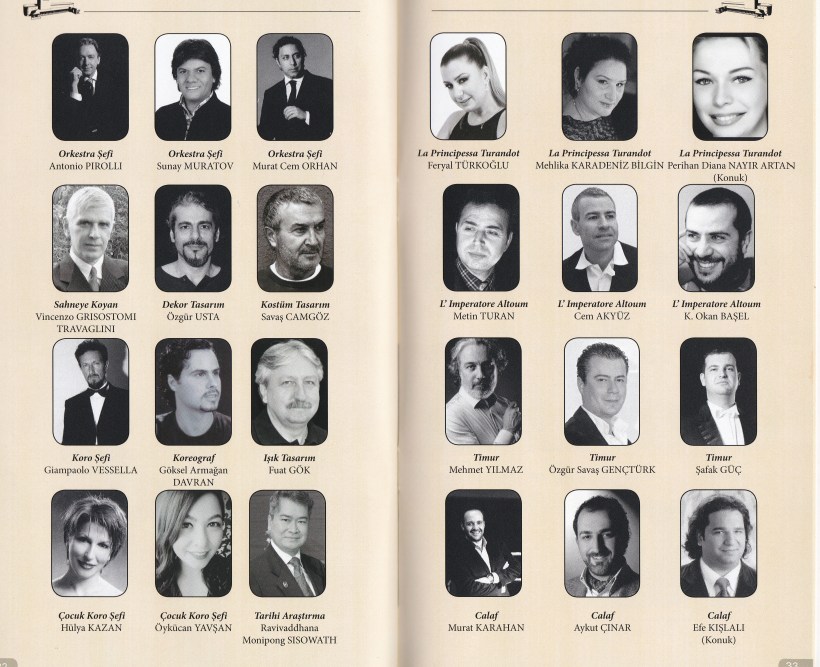
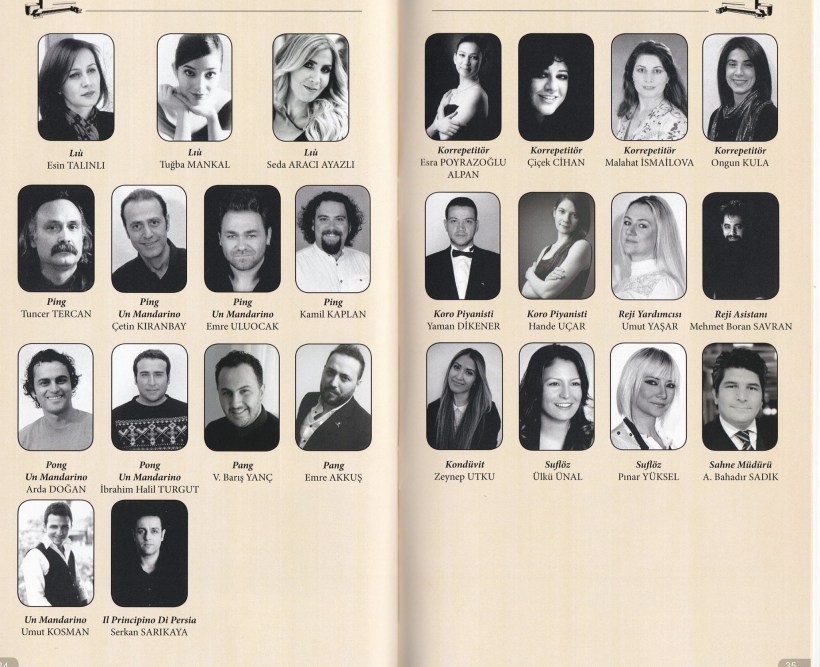
This exceptional production was also possible thanks to the participation of incredibly talented soloists such as Mehlika Karadeniz Bilgin, Perihan Nayır Artan, Murat Karahan, Aykut Çınar, Efe Kışlalı, Cem Akyüz, Özgür Savaş Gençtürk, Şafak Güç, Esin Talınlı, Tuğba Mankal Dekak, Seda Aracı Ayazlı, Tuncer Tercan, Çetin Kıranbay, Emre Uluocak, Kamil Kaplan, Arda Doğan, İbrahim Halil Turgut, Barış Yanç and Emre Akkuş… and all the artists of the Ankara State Opera Koro, under the direction of Maestro Giampaolo Vessella.
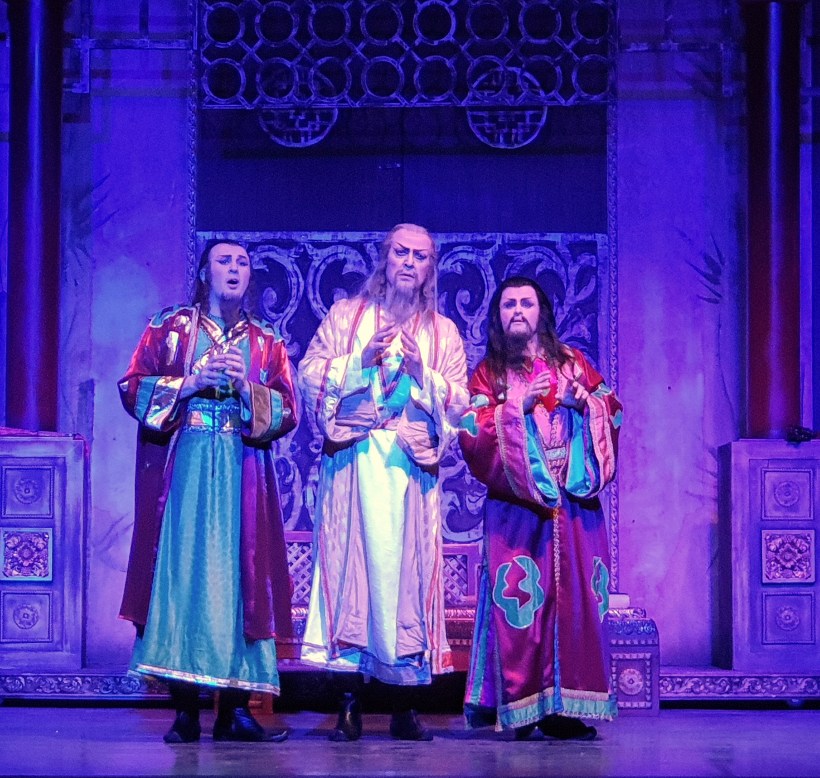
A special mention for Çetin Kıranbay, Barış Yanç and Arda Doğan, unforgettable Ping, Pang and Pong whose stage plays fabulously funny and “grotesque” as originally described by Puccini was one of the greatest moments of the performance.
Çetin Kıranbay, Barış Yanç and Arda Doğan, unforgettable Ping, Pang and Pong
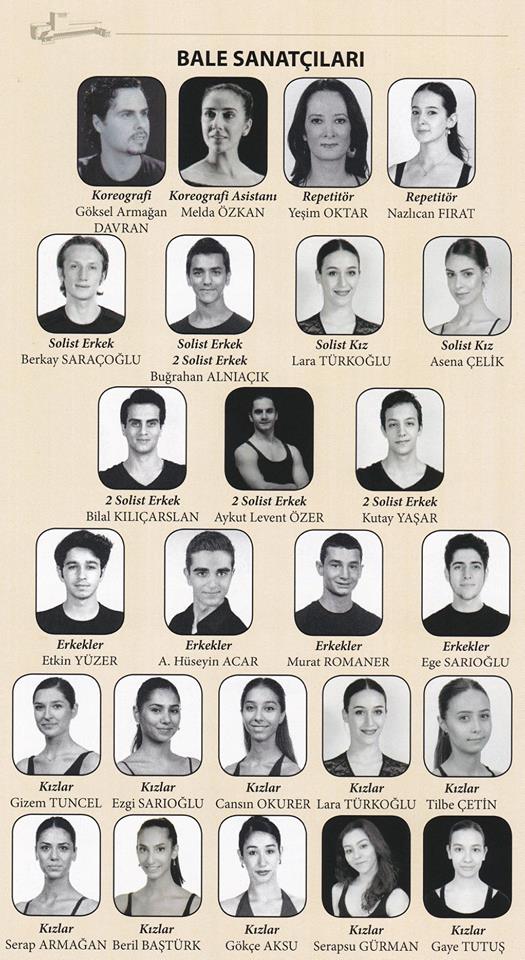
I must also recognise that one of the magic elements of this Turandot was the use of the Ankara State Ballet. Both men and women dancers were absolutely smashing and gave a dynamic to special moments, like the Pu Ting Pao appearances, which was unique.
Not to forget anyone, here are the names of this impressive cast for my favourite version of “TURANDOT” ever …
To be noted the presence in the audience, Enrico Stinchelli, a famous Italian radio conductor, special guest of Ankara State Opera and Ballet, who actually enjoyed the performance.
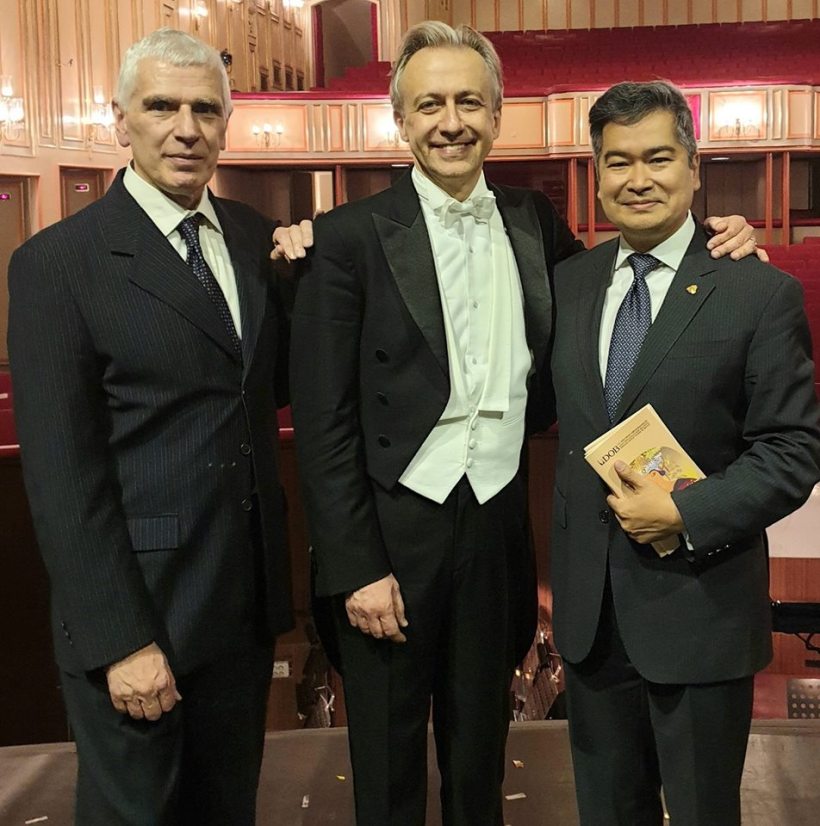
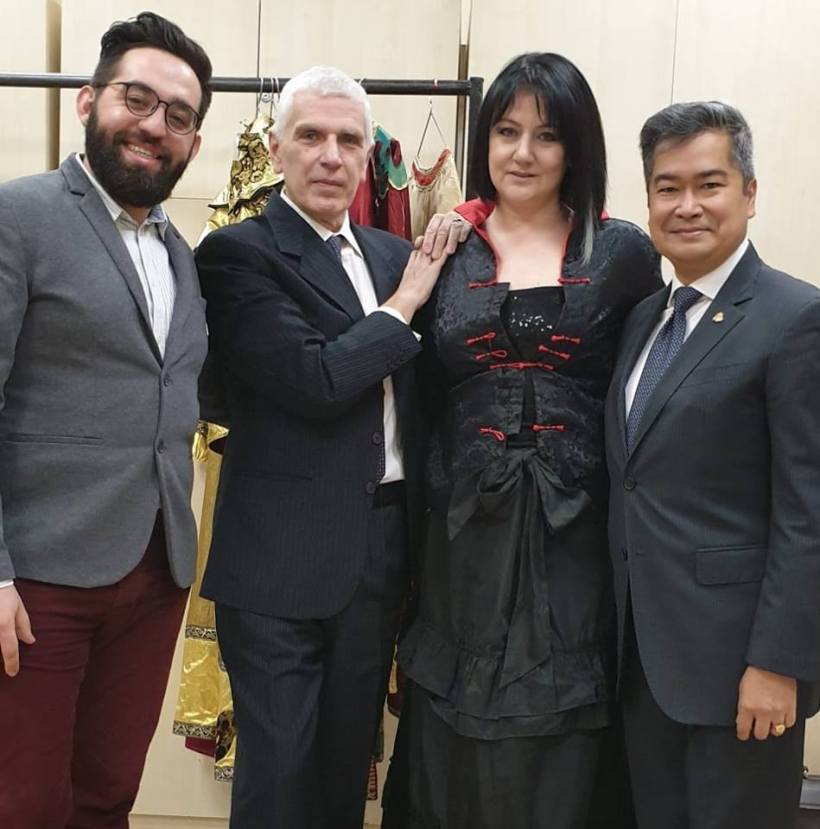
Together with Maestro Antonio Pirolli & Maestro Vincenzo Grisostomi TravagliniMaestro Vincenzo Grisostomi Travaglini, between Umut Yasar, Director Assistant and Boran Savran, Staging Assistant…. and me !
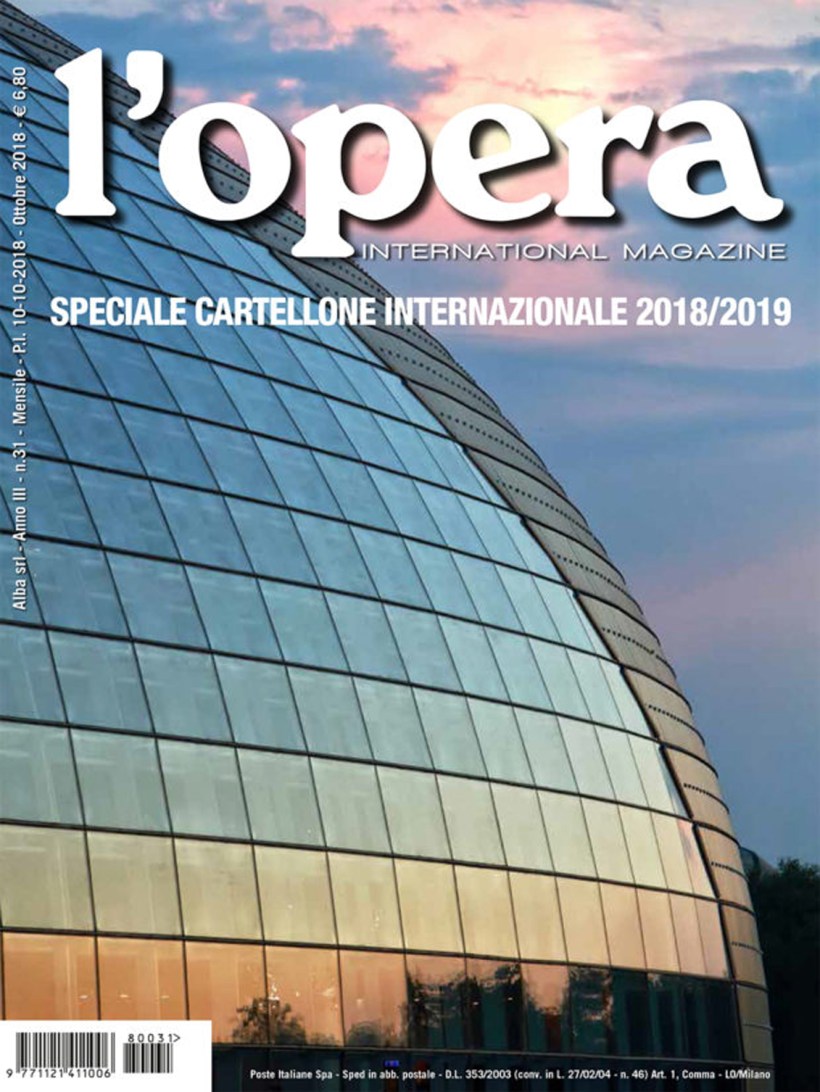
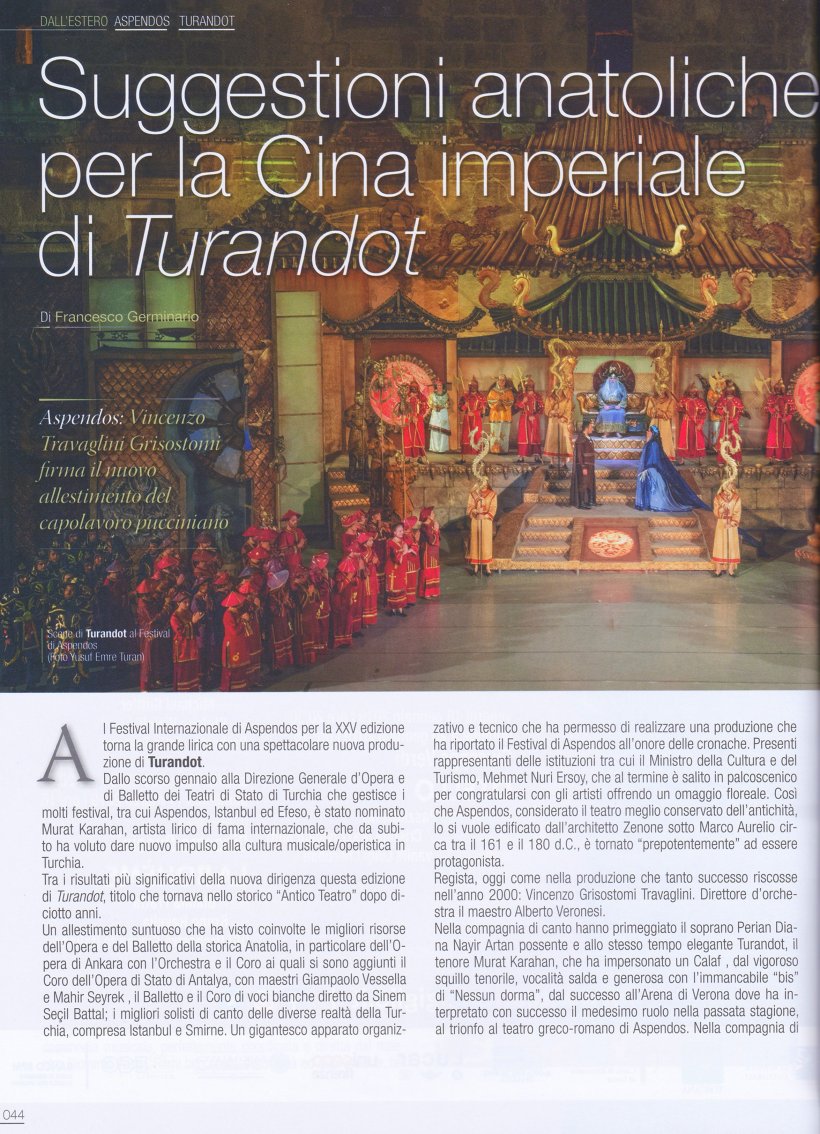
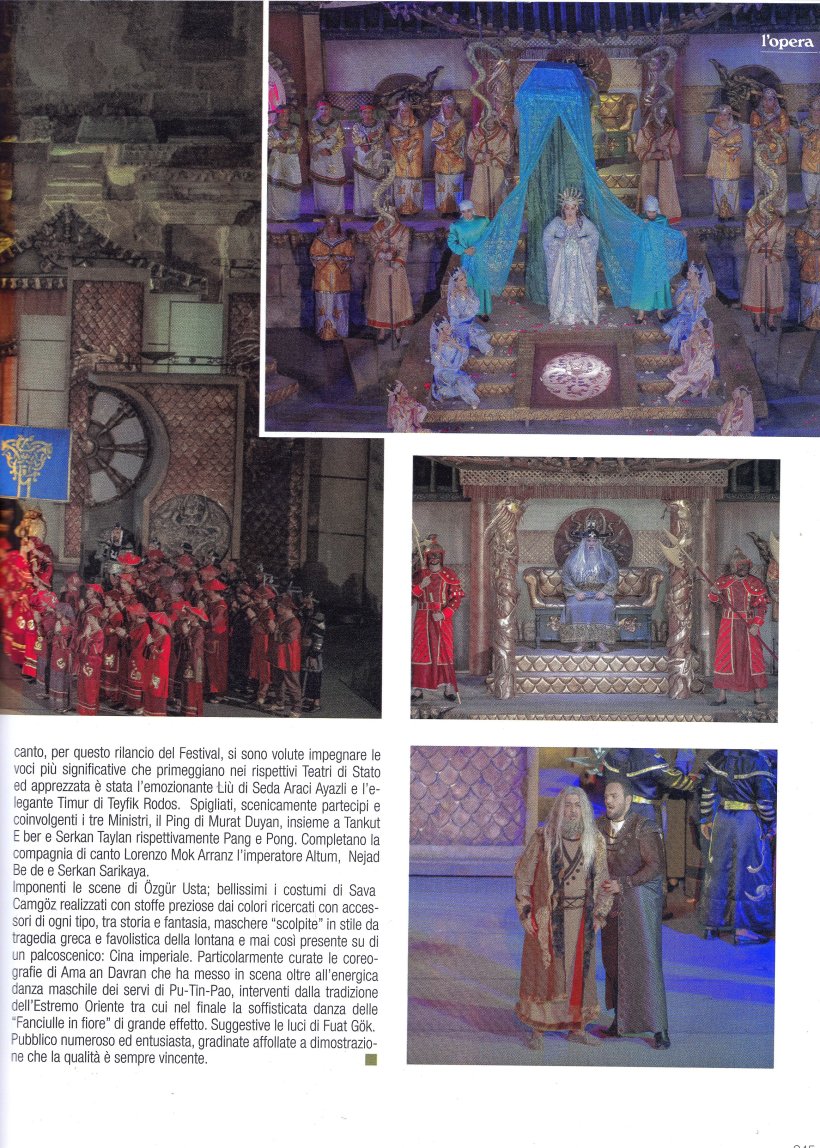
“Suggestioni anatoliche per la Cina Imperiale di Turandot: Aspendos, Vincenzo Grisostomi Travaglini firma il nuovo allestimento del capolavoro pucciniano”, articolo di Francesco Germinario nel numero di Ottobre 2018 di “L’Opera International Magazine”
Turkish translation:
Turandot’un Çin İmparatorluğu için Anadolu İlhamları
Francesco Germinario, L’Opera Dergisi
Traduzione – çeviri: Suna Ertekin
Aspendos: Vincenzo Travaglini Grisostomi, Puccini’nin başyapıtının yeniden sahneye koyuluşunu imzalıyor.
25. Uluslararsı Aspendos Festivali’nde büyük opera Turandot gösterişli yeni bir prodüksiyonla geri dönüyor.
Geçtiğimiz Ocak ayından itibaren aralarında Aspendos, İstanbul ve Efes’in de olduğu birçok festivaller düzenleyen Türkiye Devlet Opera ve Balesi Genel Müdürlüğüne uluslararası üne sahip opera şarkıcısı Murat Karahan atandı ve hemen Türkiye’deki müzikal/opera kültürüne yeni bir nabız katmak istedi.
Yeni yönetimin en anlamlı sonuçları arasında Turandot’un bu edisyonunu buluyoruz, bu eser tarihi “Antik Tiyatro”ya 18 yıl sonra geri döndü.
Tarihi Anadolu’nun Opera ve Balesi’nin en iyi kaynaklarının bir araya geldiği görkemli bir sahneleme, özellikle Ankara Operası, Orkestrası ve Korosuna Antalya Devlet Operası’nın korosunun koro şefleri Giampaolo Vassella ve Mahir Seyrek ile, Balenin ve Sinem Seçil Battal tarafından yönetilen çocuk korosunun katılımıyla gerçekleşti; eseri İstanbul ve İzmir’i de içeren Türkiye’nin çeşitli realitelerinin en iyi şan solistleri seslendirdiler. Dev bir organizasyon ve teknik ekip sayesinde gerçekleştirilen bu prodüksiyon Aspendos Festivalini haberlere çıkma şerefine eriştirdi. Çeşitli kurumların temsilcileri arasında Kültür ve Turizm Bakanı Mehmet Nuri Ersoy da vardı, temsil sonunda sahneye çıkarak sanatçılara çiçek verip tebriklerini sundu. Aspendos antik çağlardan kalan en iyi tiyatro sayılmaktadır, mimar Zenon tarafından Marcus Aurelius için M.S. 161 ve 180 yılları arasında inşa ettirilmiştir; antik tiyatro bu temsille “güçlü” bir şekilde yeniden gözler önüne çıktı diyebiliriz.
Rejisörlüğü, bugün olduğu gibi bu prodüksiyonla 2000 yılında da çok başarı kazanan Vincenzo Grisostomi Travaglini üstlendi. Orkestra Şefliğini maestro Alberto Veronesi yaptı.
Şan grubunda başlıca rolleri soprano Perihan Diyana Nayır Artan güçlü ve aynı zamanda şık bir Turandot olarak, tenor Murat Karahan güçlü, sağlam ve cömert tenor sesiyle Calaf olarak, “Nessun dorma”yı kaçırılmayacak “bis” ile seslendirdi; aynı rolü geçtiğimiz sezon Verona Arenası’nda büyük başarı ile seslendirmişti ve Aspendos greko-romen tiyatrosunda da zafer kazandı. Şancılar arasında, Festivalin bu açılışı için, Devlet Operası’nın çeşitli müdürlüklerinden öne çıkan en anlamlı sesler görevlendirildi, Seda Aracı Ayazlı’nın duygu dolu Liù rolü ve Teyfik Rodos’un şık Timur rolü beğeni kazandı. Canlı, sahneye katılım gösteren ve dikkat çeken üç bakan rollerinde Ping rolünü üstlenen Murat Duyan, Pang ve Pong rollerinde Tankut Eşber ve Serkan Taylan vardı. Şan grubunu İmparator Altum rolünde Lorenzo Mok Arranz, Nejat Beğde ve Serkan Sarıkaya tamamladı.
Özgür Usta’nın dekorları heybetliydi; Savaş Camgöz’ün değerli kumaşlarla ve özenle seçilen renklerle gerçekleştirdiği her türden aksesuarların kullanıldığı kostümleri çok güzeldi, tarih ve fantazi arasında, Yunan trajedisi stilinde “oyulmuş” maskelerle masalımsı uzak Çin İmparatorluğu sahnede daha önce hiç bu kadar öne çıkmamıştı. Özellikle Armağan Davran’ın koreografileri özenle çalışılmıştı, Pu-Tin-Pao’nun hizmetkârları erkek balesinin enerjik dansından başka Uzak Doğu geleneğine göre düzenlenen ve finaldeki sofistike “çiçekli kızlar” dansı çok etkiliydi. Fuat Gök’ün ışık düzeni güzeldi. Kalabalık ve heyecanlı seyirci, tribünleri doldurarak iyi kalitenin her zaman kazanacağını kanıtladı.
On Tuesday 4th September 2018 was released a marvellous “Turandot” at XXVth Aspendos International Festival in Turkey.
Photo credits: Yusuf Emre Turan
Following the impulsion of the newly nominated Director General of Turkish Opera Theatres and Ballet, young and already famous Tenor Murat Karahan, “Turandot” has come back on Aspendos stage after eighteen years.
“Nessun dorma” by Tenor Murat Karahan, Director General of the Opera Theatres of Turkey (Photo credits: Yusuf Emre Turan)
Last time, in 2000, Ankara’s Opera called Maestro Antonio Pirolli to be the conductor and Maestro Vincenzo Grisostomi Travaglini to assume the stage direction with the fantastic Nilgun Akkerman as Turandot and it was already a success.
This year, the choice of Maestro Alberto Veronesi as conductor, united with the return of Maestro Vincenzo Grisostomi Travaglini for the stage direction, indicates clearly the will of the Director General of the Turkish Opera to express with magnificent emphasis his taste for the genuine essence of art and music at its utmost level.
Maestro Alberto VeronesiMaestro Vincenzo Grisostomi Travaglini
In the grandiose settings of Aspendos Antique Theatre, the best singers of Turkey were called to give life to the ultimate characters of Giacomo Puccini. The brilliant cast included Perihan Diana Nayir Artan as Princess Turandot, Murat Karahan as Prince Calaf, Lorenzo Mok Arranz as Emperor Altom, Teyfik Rodos as Timur, Seda Araci Ayazli as Liu, Murat Duyan as Ping, Tankut Esber as Pang, Serkan Teylan as Pong, Nejad Begde as one Mandarin and Serkan Sarikaya in the role of the Prince of Persia.
Photo credits: Yusuf Emre Turan
The lovely sets were signed by Ozgur Usta and the beautiful costumes by Savas Camgoz. To be noted the elegant choreography of Amagan Davran and the inspiring light designing of Fuat Gok.
Photo credits: Yusuf Emre Turan
The combination between the brio and sensitivity of Maestro Veronesi together with the supreme harmony of the royal court, rendered in a rich and colourful manner by Maestro Grisostomi Travaglini has reached its climax in this particularly difficult opera of Puccini. The audience was definitely convinced and the long ovation at the end of the performance was just the confirmation of the enthusiasm, already expressed when Murat Karahan was warmly invited to sing “Nessun dorma” a second time !
Photo credits: Yusuf Emre Turan
Last but not least, the incredible honour the artists were granted by His Excellency Mehmet Nuri Ersoy, Minister of Culture and Tourism of Turkey, when he went on stage to congratulate all of them with a bunch of white flowers in sign of gratitude for their art and work.
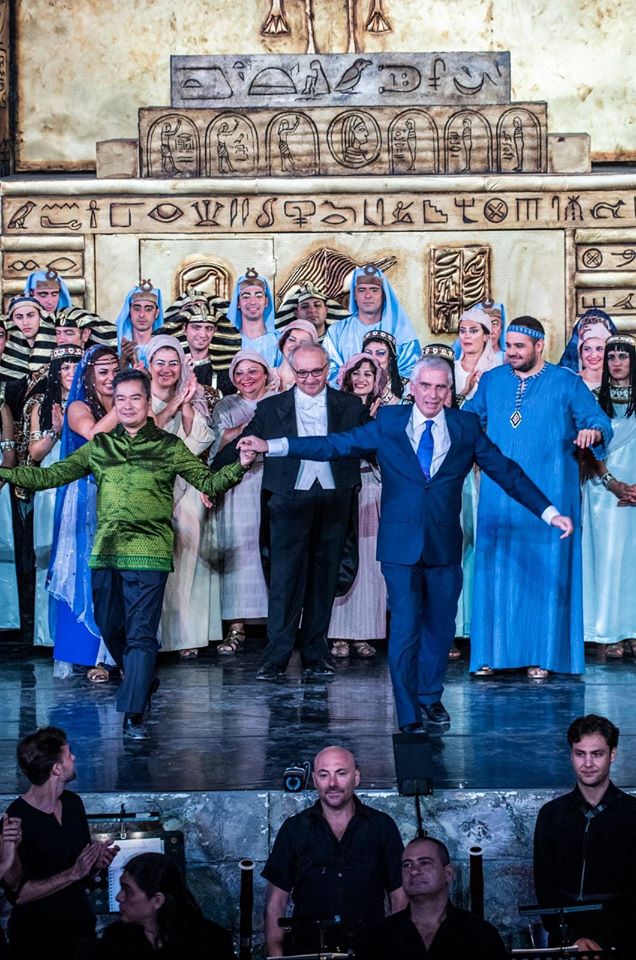
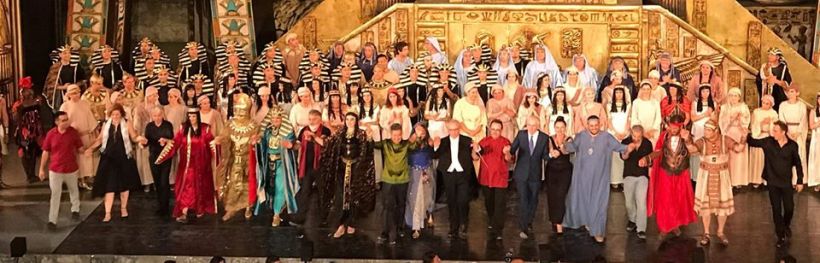
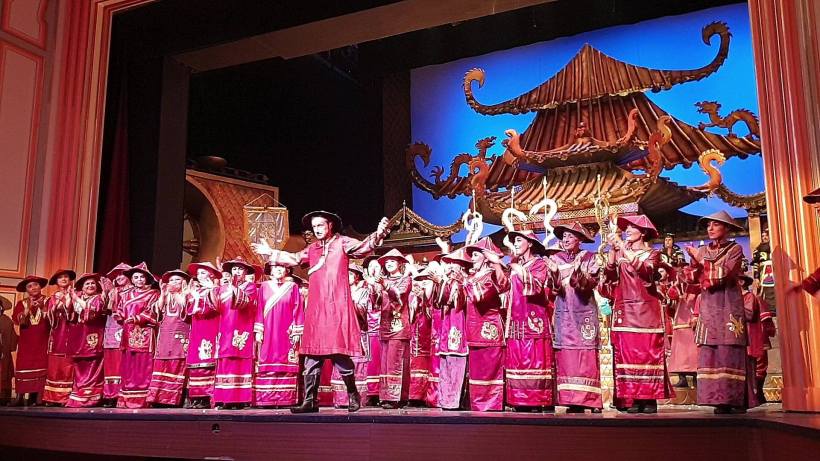
Final Curtain Call (Photo credits: Yusuf Emre Turan)
Many thanks to Official photographer Yusuf Emre Turan who did marvellous pictures of this enchanting evening.


 Sisowath Ravivaddhana Monipong